
September 1, 2026, brought me wonderful news.
As autumn began in Finland, I received confirmation that I had been granted the right to pursue doctoral studies at LUT University. I am now beginning a new chapter as a doctoral researcher in the Doctoral Programme in Engineering Science, within the field of Software Engineering, working towards a Doctor of Philosophy degree.
After all the dedication and hard work that went into reaching this point, September 1 felt like a fitting day to receive the decision. For an Ethiopian-born person, September also carries a special sense of renewal as the Ethiopian New Year approaches. This news therefore felt like an early New Year’s gift—one arriving at the meeting point of two seasons and two cultures, but carrying the same message: a new beginning is here.
God is great.
Although earning this doctoral study right is an important milestone and the realization of a long-held personal goal, I understand that it is only the beginning. A demanding journey lies ahead, filled with research, learning, discipline, uncertainty, discovery and, I hope, a meaningful contribution to society.
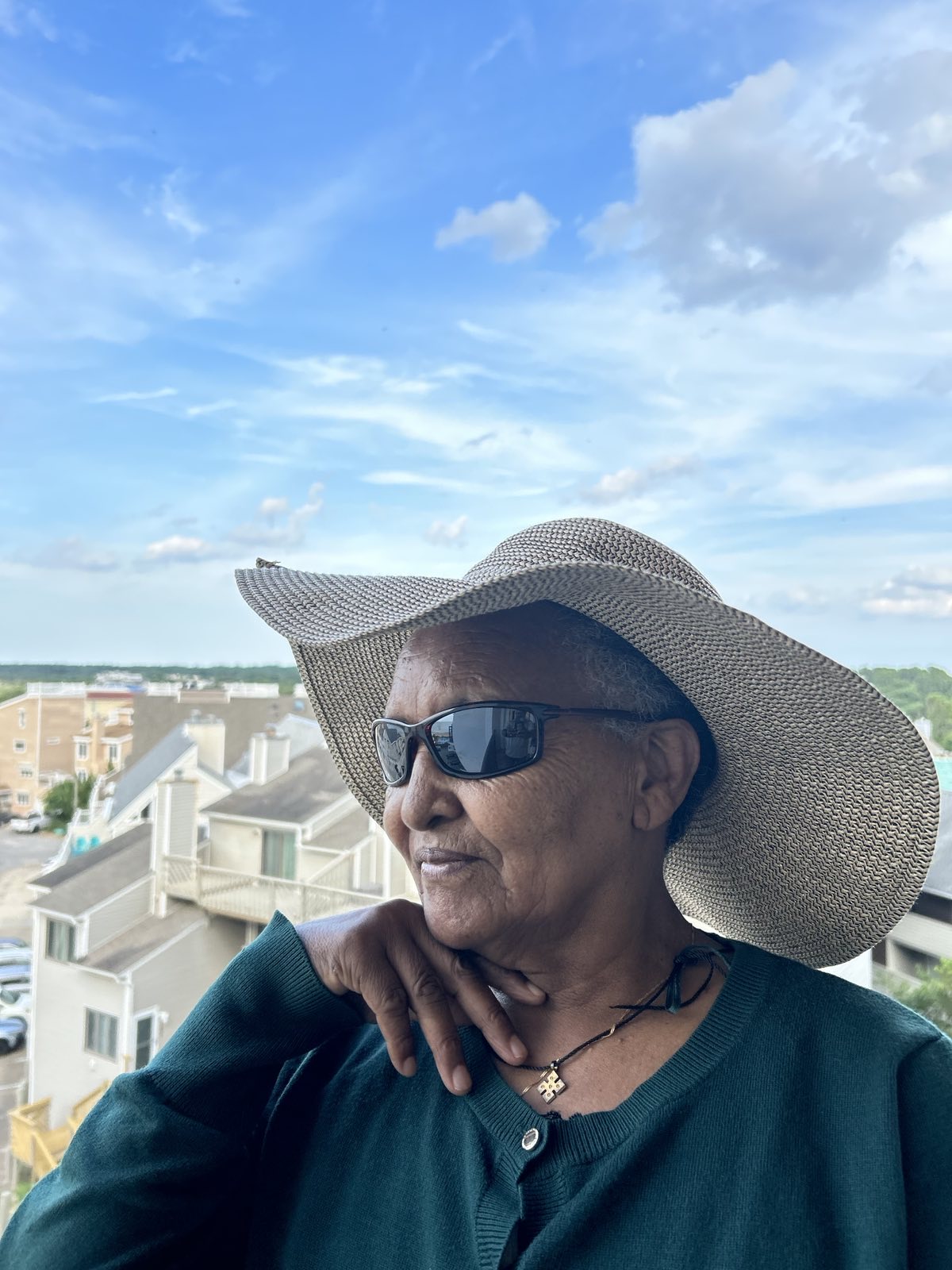
Yet when I received the news, my first thoughts did not begin at a university or with a research proposal. They travelled much further back—to my childhood, to the Ethiopian countryside and to the memory of studying alongside my mother.
The lesson that began at home
When I was a young boy in the fourth grade, my mother began attending adult education classes in the evenings. Growing up in the countryside, she had not been given the opportunity to attend school as a child.
At that time, Ethiopia was running a nationwide adult literacy and basic education programme known as Meserete Timhirt—መሠረተ ትምህርት. Adults who had not previously learned to read and write were encouraged to study, while young people who had completed secondary school participated in teaching communities across the country.
Those years gave me memories that remain precious today.
My mother and I were studying at approximately the same grade level. I felt like a big boy as we worked through mathematics and other school subjects together. Sometimes we competed playfully. We completed our homework side by side and even shared the same fourth-grade textbooks. Behind those simple family moments was a powerful lesson. My mother told me, in clear and unforgettable words: “If you do not want to live the same difficult life that I have lived, you must study very hard.”
That message stayed with me.
She helped me understand that education was not merely about collecting qualifications or being able to say that one had completed a particular programme. Education could change the direction of a life. It could create opportunities, expand choices and provide tools for serving others. Unlike many material possessions, knowledge is an asset that travels with us wherever life takes us. My mother planted that belief in me before I could fully understand how important it would become.
An achievement measured through generations
Although my mother was not able to continue her formal education for many years, the true measure of her achievement cannot be found in the number of grades she completed or the certificates she received. Her success can be seen in the lives she helped shape. Her children have gone on to serve their communities in different parts of the world: as a respected and deeply loved pastor in the United States, a specialist physician in the United States, IT specialists and management-level professionals in Finland, an entrepreneur in Ethiopia and through other meaningful professional and community roles.
Each of her children has, of course, worked hard and made individual sacrifices to build a life and career. But none of these stories began with individual effort alone. Behind them stands a courageous woman who took the first step towards learning to read and write and who then ensured that her children understood the value of education.
Her influence was not limited by the length of her own formal schooling. It was expressed through the way she raised us, guided us, encouraged us and directed us towards a better future. She possessed a powerful ability to lead her children in the right direction, even when her own opportunities had been limited.
She may not have continued far within the formal education system, but she created a culture of learning within her family. She transformed the little education she received into something much greater; a foundation upon which the next generation could build.
Her children’s achievements are therefore also part of her legacy. When I think about her courage, I am reminded that education does not influence only one person. Its impact can travel across generations, professions, countries and communities. A single opportunity to learn can become the beginning of many other opportunities. That is the quiet but extraordinary power of my mother’s story.
A journey that did not follow a straight road
My own educational journey was not always easy or predictable. At the end of high school, I did not earn enough points to enter university through the path I had hoped for. That could have become the end of my academic ambition. Instead, I continued looking for other opportunities to learn. The road was not straight, but I kept moving. After relocating to Finland, I continued building my education step by step. I completed a bachelor’s degree in an information technology-related field, followed by a Bachelor of Business Administration in IT Business Technology and a Master of Business Administration in IT Business Administration. I studied cybersecurity, became a Certified Information Systems Auditor and pursued further studies in leadership and management.
Each qualification represented more than an academic achievement. Each was another step on a ladder built from persistence, professional experience, encouragement and the support of many people along the way. The boy who once shared a fourth-grade textbook with his mother did not reach this moment through one perfect plan. He reached it by continuing to learn whenever another opportunity appeared.
That is why receiving the doctoral study right meant so much to me. It brought my mother’s message back with remarkable clarity. The adult education classes she attended many years ago were not disconnected from this achievement. In many ways, they were part of its foundation.
Research with a practical purpose
My doctoral research is titled as “Operationalizing Data Sovereignty in Hybrid Cloud Public-Sector Ecosystems.”
The aim of my dissertation is to develop an empirical understanding of how data sovereignty is put into practice within hybrid cloud environments across interconnected public-sector ecosystems.
Data sovereignty is often discussed primarily through laws, policies and abstract principles. These perspectives are essential, but my research will examine what sovereignty means in everyday organizational and technological practice.
How is it enacted and sustained when public services depend on multiple organizations, cloud platforms, identity systems, shared infrastructures and external technology providers? How do governance arrangements, infrastructure choices, organizational decisions and inter-organizational relationships strengthen—or constrain—a public organization’s ability to exercise meaningful control over its data and digital services?
The study will approach data sovereignty as a socio-technical governance capability. This means examining how sovereignty emerges through the interaction of people, organizations, policies, technologies, identities, infrastructure and dependencies.
The research is expected to contribute to the growing literature on digital sovereignty, data sovereignty, public-sector digital governance and hybrid cloud governance. More importantly, I hope it will produce practical insights for policymakers, public-sector organizations, cloud governance professionals and technology decision-makers.
Public organizations must increasingly balance sovereignty requirements with cloud adoption, interoperability, resilience, service continuity and dependence on external providers. These questions are not purely technical, nor can they be answered by policy alone. They require a deeper understanding of how governance and technology work together in real public-sector environments. My ambition is to contribute to that understanding.
A milestone—and a beginning
Becoming a doctoral researcher is one of my important life goals, and receiving the study right is a milestone that I am proud and grateful to have reached. At the same time, I want to receive this achievement with humility. Admission is not the destination. It is permission to begin the real work.
There will be many books and research papers to read, questions to refine, data to collect, ideas to challenge and findings to communicate. There will undoubtedly be difficult periods alongside moments of progress and discovery. The doctoral degree remains at the far end of that journey.
Today, however, I allow myself to pause and appreciate how far the road has already travelled—from a shared fourth-grade schoolbook in Ethiopia to the beginning of doctoral research at LUT University in Finland.
Gratitude for the journey behind me—and the journey ahead
I am deeply grateful to everyone who has supported me in one way or another. Some people contributed directly to my studies and professional development. Others offered encouragement, friendship, trust, guidance or an opportunity at the right moment. Some may not even realize how their support helped me reach this point. Every milestone in life can become a step towards another. Every lesson, challenge, professional experience and act of encouragement has been part of the ladder that brought me here.
Above all, I remain grateful for the lesson my mother gave me as we studied together many years ago. Her opportunity to begin learning later in life became part of my motivation to continue learning throughout mine. Her courage, guidance and belief in education continue to live through the paths taken by her children.
My gratitude is not limited to those who helped me reach this starting point. I also want to thank, in advance, the people who will walk beside me during the doctoral journey ahead.
Research is never completed in isolation. It develops through supervision, collaboration, critical discussion, professional support, institutional trust and the willingness of others to share their experiences and knowledge. I know that I will need guidance, encouragement, honest feedback and patience throughout the coming years. I therefore look forward with gratitude to the support of my supervisors, academic colleagues, research participants, professional networks, friends, family members and everyone who will contribute to this journey in ways I may not yet be able to foresee.
A new chapter has now begun.
I am excited to learn, grow and, through my research, contribute something valuable to the academic community, the public sector and the wider technology industry.
There is a long journey ahead, but today, I celebrate its beginning.
Stay tuned for the progress.

